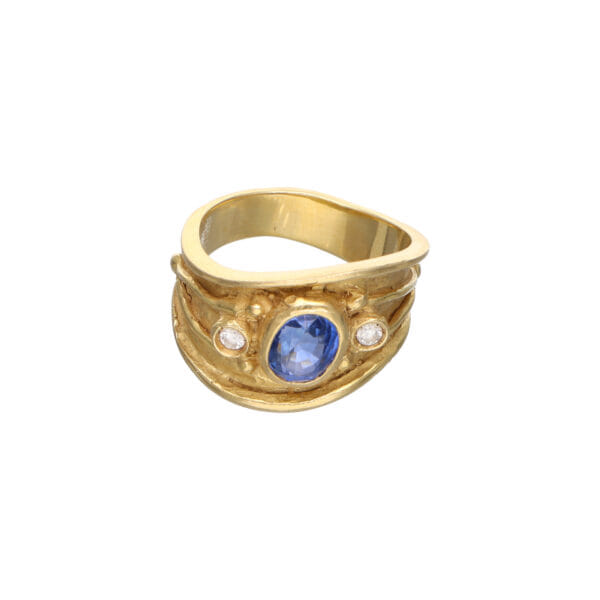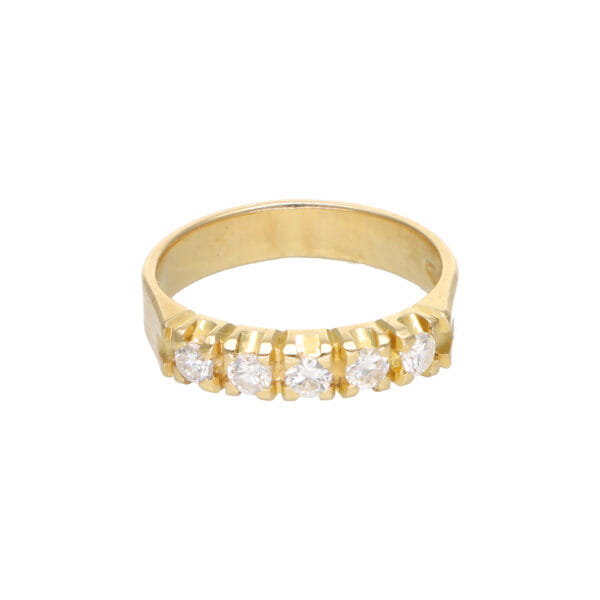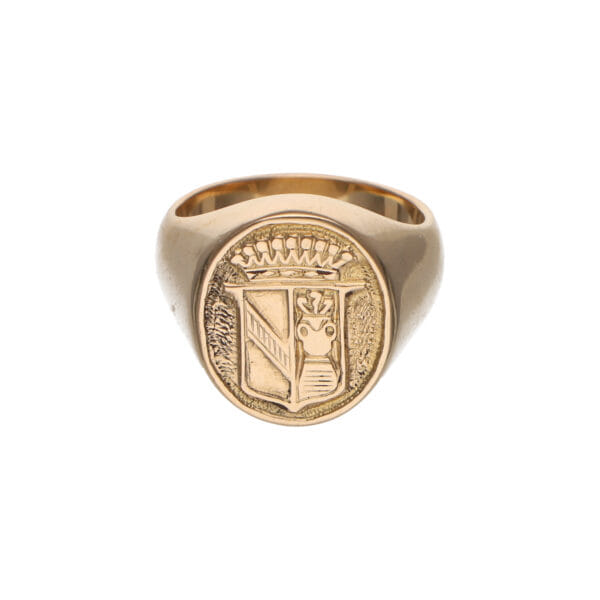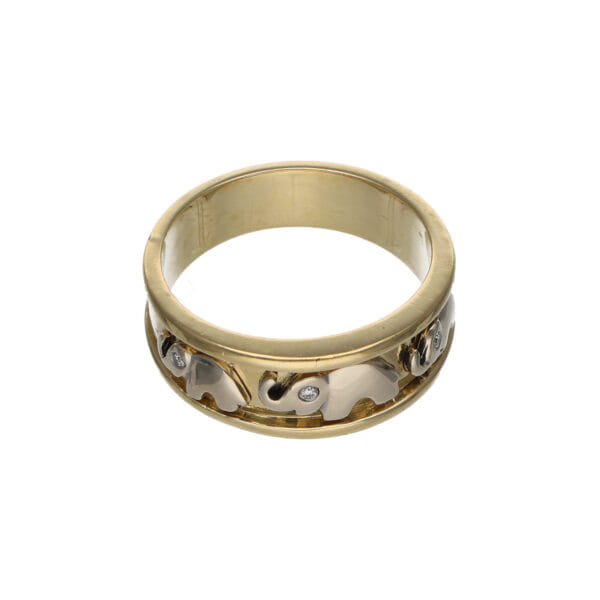
When nature, imagination, and craftsmanship reshaped the art of jewellery.
A New Spirit in Art
The second half of the 19th century marked a turning point in the world of the decorative arts. For much of that century, public taste had been dominated by revivals of historic styles — neoclassical, baroque, rococo — reinterpreted endlessly through industrial production.
But as the century drew to a close, a new aesthetic blossomed across Europe: Art Nouveau, a movement that rejected imitation and mass production in favor of originality, nature, and craftsmanship.
In Italy, this style took on a distinctive name and character — the Liberty Style, inspired by Liberty & Co., the famous London store that popularized the movement’s organic and imaginative forms. Thus, Liberty became Italy’s own expression of Art Nouveau, blending international innovation with Italian elegance and artistry.
The Birth of Art Nouveau
The name Art Nouveau itself comes from La Maison de l’Art Nouveau, the Paris gallery opened in 1895 by Siegfried Bing, which showcased a new vision of art — fluid, natural, and modern.
Across Europe, the movement adopted different names yet shared a single soul:
- Jugendstil in Germany
- Style Moderne in France
- Secession in Austria
- Modernismo in Spain
- Liberty Style in Italy
Though the names varied, the essence was the same — a rebellion against industrial conformity, and a return to art as emotion and craftsmanship.
The Language of Nature
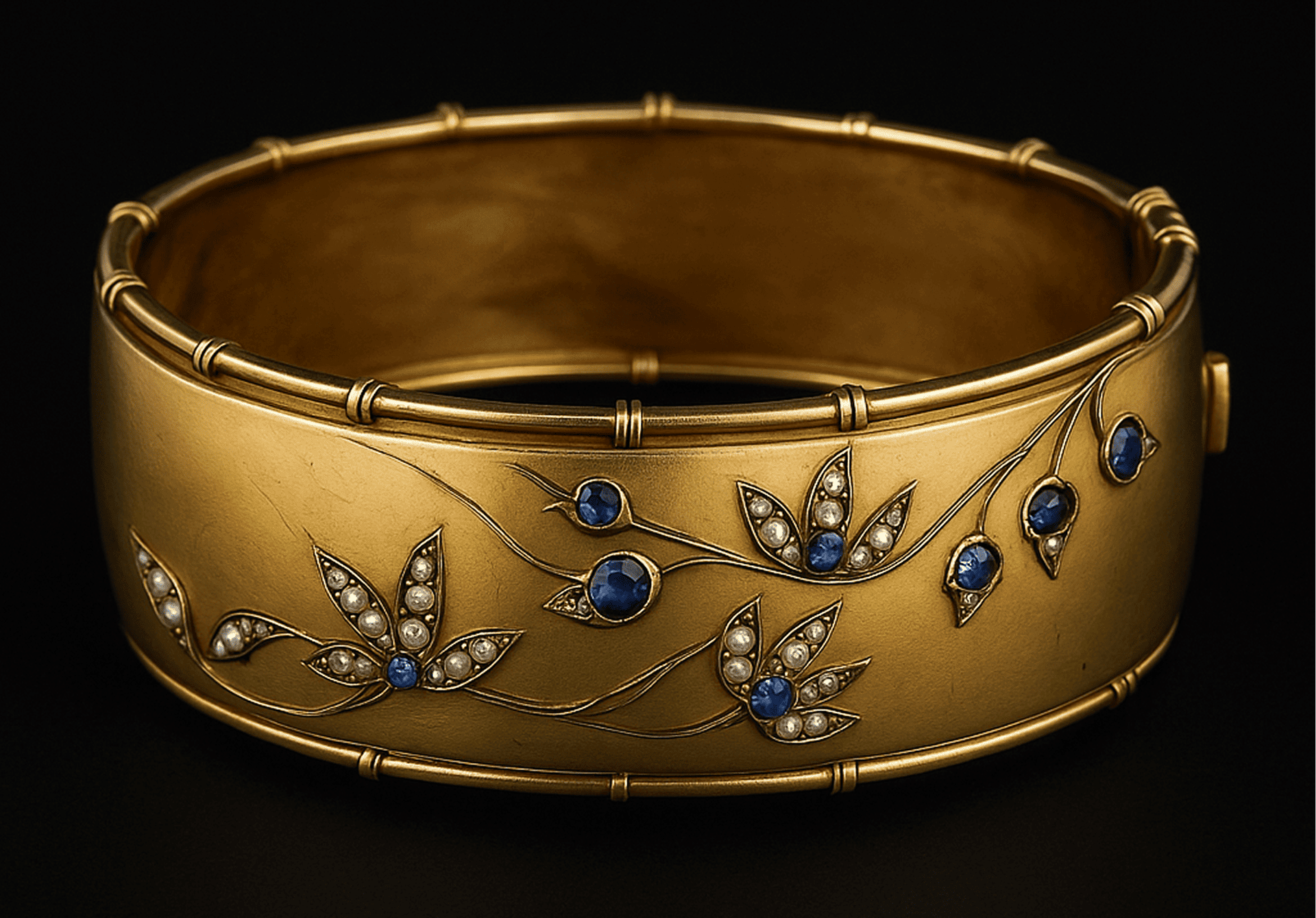
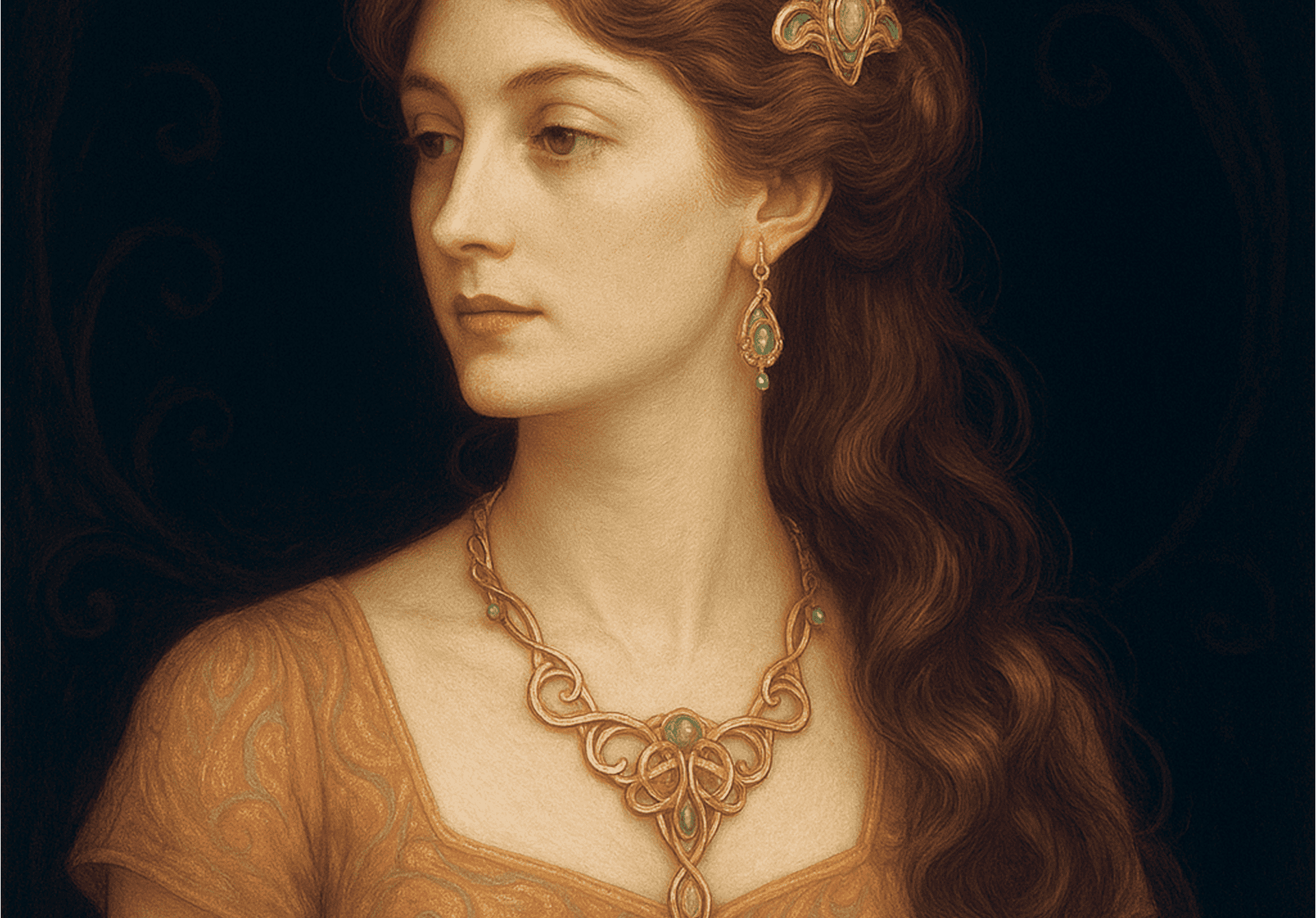
Art Nouveau — and its Italian Liberty counterpart — drew its inspiration from the organic and the feminine. Flowing lines replaced rigid symmetry; jewellery became alive with motion and form.
Dragonflies, butterflies, flowers, serpents, and swans emerged in gold and enamel, each representing nature’s grace and vitality. Jewels of this era were more than ornaments — they were wearable poetry, intimate expressions of the imagination.
Gold was often treated to harmonize with enamels and translucent stones, chosen for their light and tone rather than for rarity. Softly hued gems — amethyst, aquamarine, opal — replaced the dominance of diamonds and rubies. In Liberty jewellery, artistry outweighed opulence: value was defined by craftsmanship, not carats.
A Return to the Artisan’s Hand
Art Nouveau was, above all, a movement of revival and resistance — a return to artistry after the mechanized uniformity of the Industrial Age.
Mass production had made jewellery more accessible, but it had also dulled its spirit. Low-carat alloys and repetitive designs flooded the market. The Liberty movement countered this with a renewed dedication to beauty, individuality, and fine workmanship.
Women of the late 19th century were evolving too — refined, independent, and expressive — seeking jewels that reflected not just status, but personality and sensibility.
Masters of the Liberty Era
The true genius of Art Nouveau was René Lalique (1860–1945), whose ethereal creations united gold, glass, enamel, and gemstones in works that transcended ornament. His artistry inspired an entire generation of goldsmiths, including those in Italy, who carried his ideals into the Liberty Style.
Other remarkable artists included Georges Fouquet, Lucien Gautrait, and Louis Comfort Tiffany, whose works helped define the golden age of creativity that flourished on both sides of the Atlantic.
The Legacy of Liberty
With the outbreak of the First World War, the delicate curves and dreamlike motifs of Art Nouveau began to fade, giving way to the geometric elegance of Art Deco in the 1920s.
Yet the Liberty Style remains one of the most poetic chapters in Italian jewellery history — a movement that celebrated nature, femininity, and the craftsman’s hand. It stands as a testament to an era when art, design, and emotion intertwined to create jewels that were not merely worn, but lived.